
Guide · October 2026
Squeal, grind or pulse: what your brakes are telling you
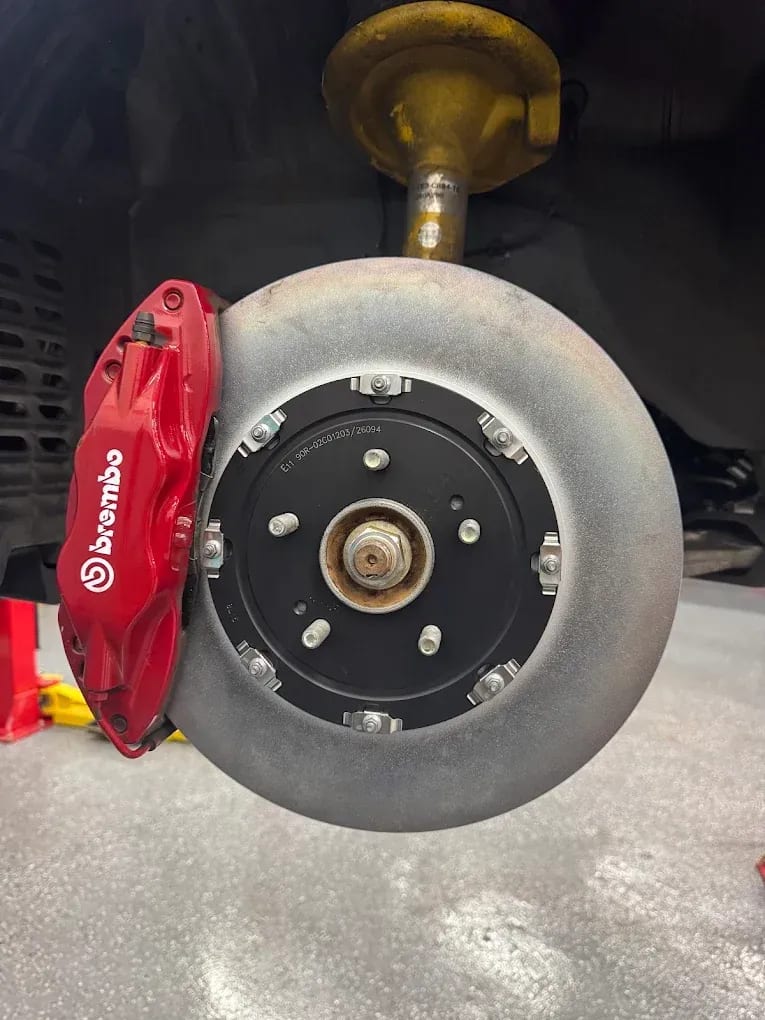
Stop-and-go traffic on I-95 and Route 1 is hard on brakes. Most cars give you a warning before brakes become a safety problem, and the warning usually comes as a sound or a feeling in the pedal. Here is what each one tends to mean.
A high squeal
Many brake pads have a small metal tab built in that squeals when the pad gets thin. It is designed to annoy you into getting them checked. A squeal can also come from dust or glazed pads. Either way, it is the cheapest time to look: often pads only.
Grinding
Grinding usually means the pad material is gone and metal is touching the rotor. Stopping distances get longer and the rotor gets damaged with every stop. Call the shop now rather than driving on it for a few more weeks.
A pulsing pedal or a shaking wheel
If the pedal pulses or the steering wheel shakes when you brake, the rotors are usually worn unevenly. It often shows up coming down a long ramp or braking from highway speed.
Pulling, a soft pedal or a brake light
- Pulling to one side under braking can mean a sticking caliper.
- A soft pedal that sinks can mean air or a leak in the system.
- A red brake light can mean low brake fluid.
- Any of these: have it checked before you drive far.
What a good brake check looks like
The shop should measure the pads and rotors, check calipers, hoses and fluid, and show you what it found before any work. You should hear what needs doing now and what can wait.
That is how we do it at John's Auto Care, 8401 Terminal Rd, Unit G in Lorton. Nothing gets done without your yes.
Brakes and rotors: Pads, rotors, calipers and brake fluid.